Image, music & source credits
Photographic montage
Photograph creators, original sources and licenses.
Boukman Eksperyans, “Kè-m pa sote.” Recording supplied by Samuel Murray.
Bois Caïman
Original generated illustrations made for this lecture. Exact prompts and revision history: image-prompts.json. Illustrative staging of the remembered Bois Caïman gathering; not documentary evidence.
Original synthesized atmosphere created for this lecture. Not a recording of a Vodou ceremony.
Illustration provenance · Complete film credits
Lecture images

Perry the Platypus, reused from the instructor’s existing DWC materials. Character © Disney. Existing source record: DWC201-Aug31-Interactive-v2/source-notes.txt.
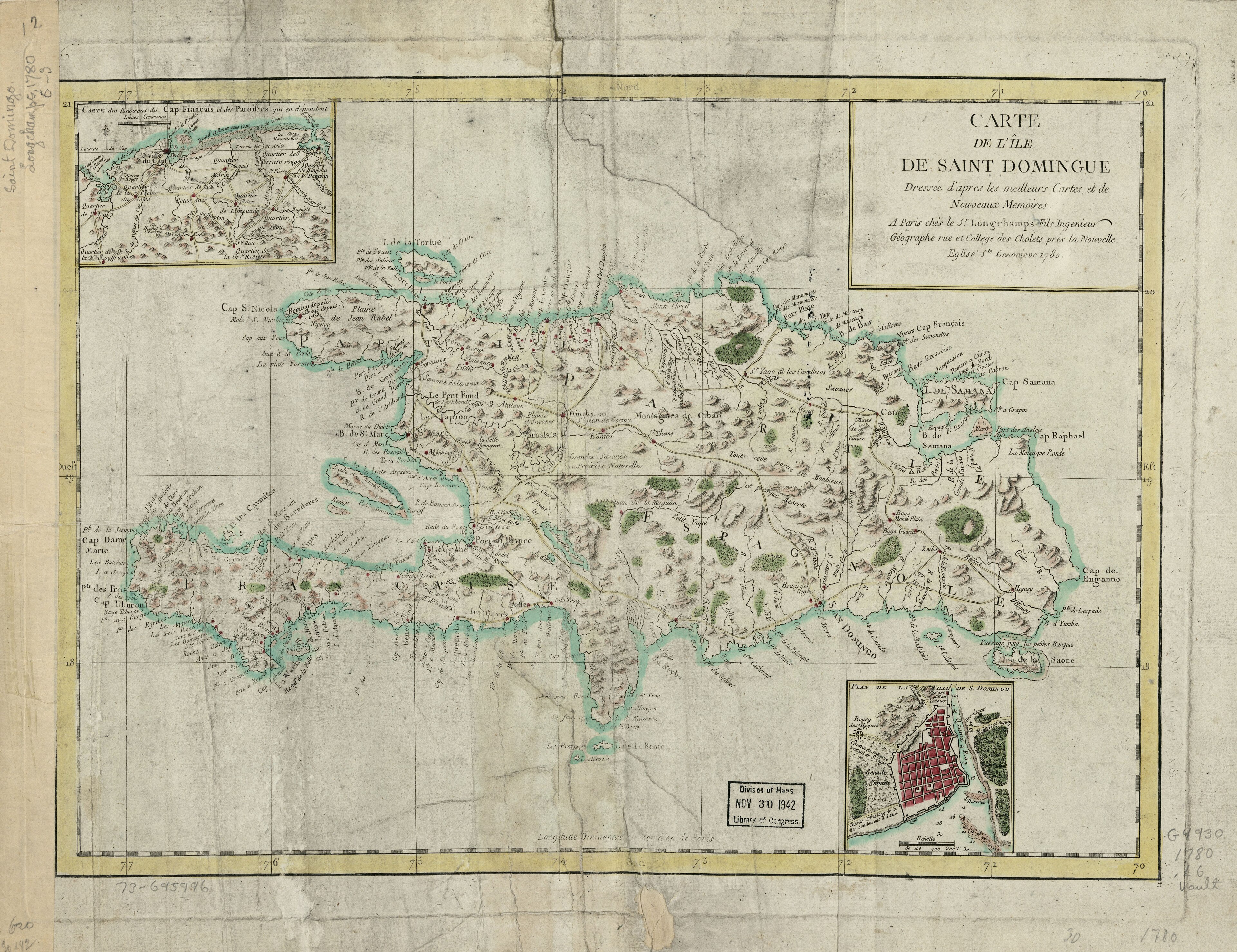
Jacques François Des Longchamps, Carte d l’île de Saint Domingue, 1780. Library of Congress. Public domain.
Source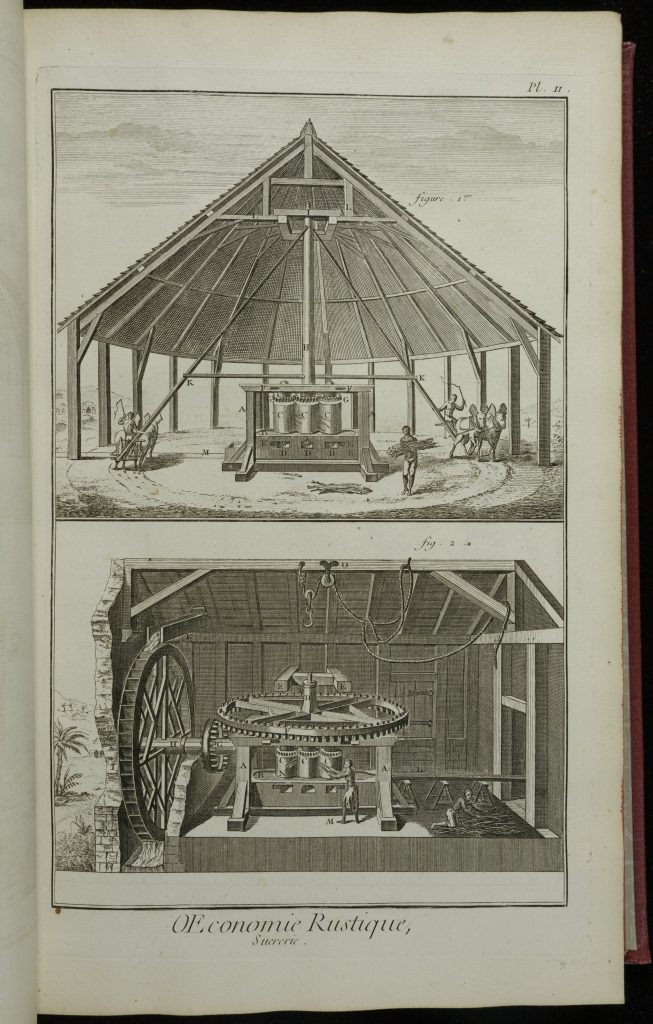
Encyclopédie, Œconomie rustique, Sucrerie, plate II, 1762. Newberry Library. Public-domain work.
Source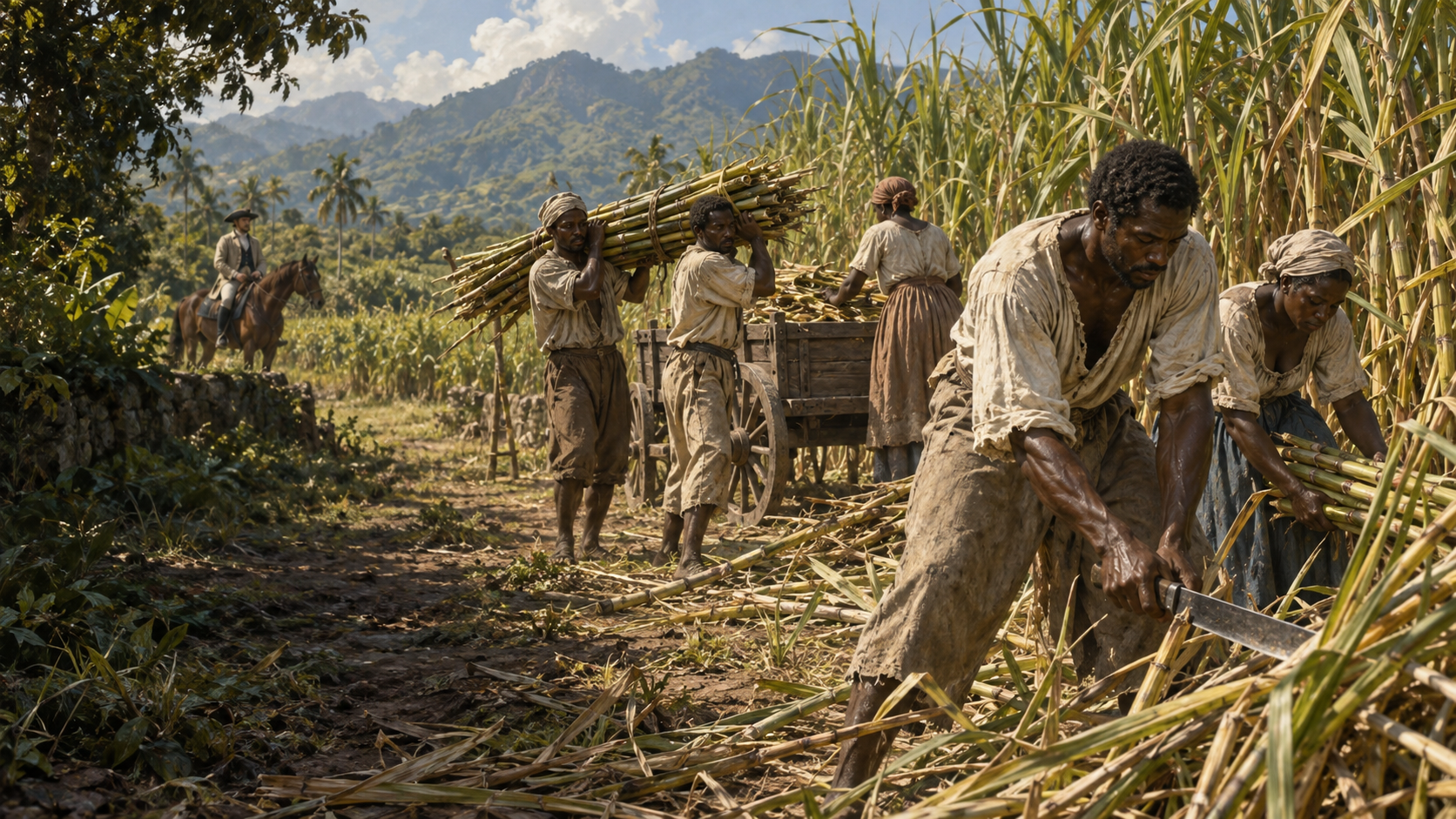
Original illustration generated for this lecture with the built-in image-generation tool. Exact prompt: image-prompts.json. The scene is illustrative, not documentary evidence.
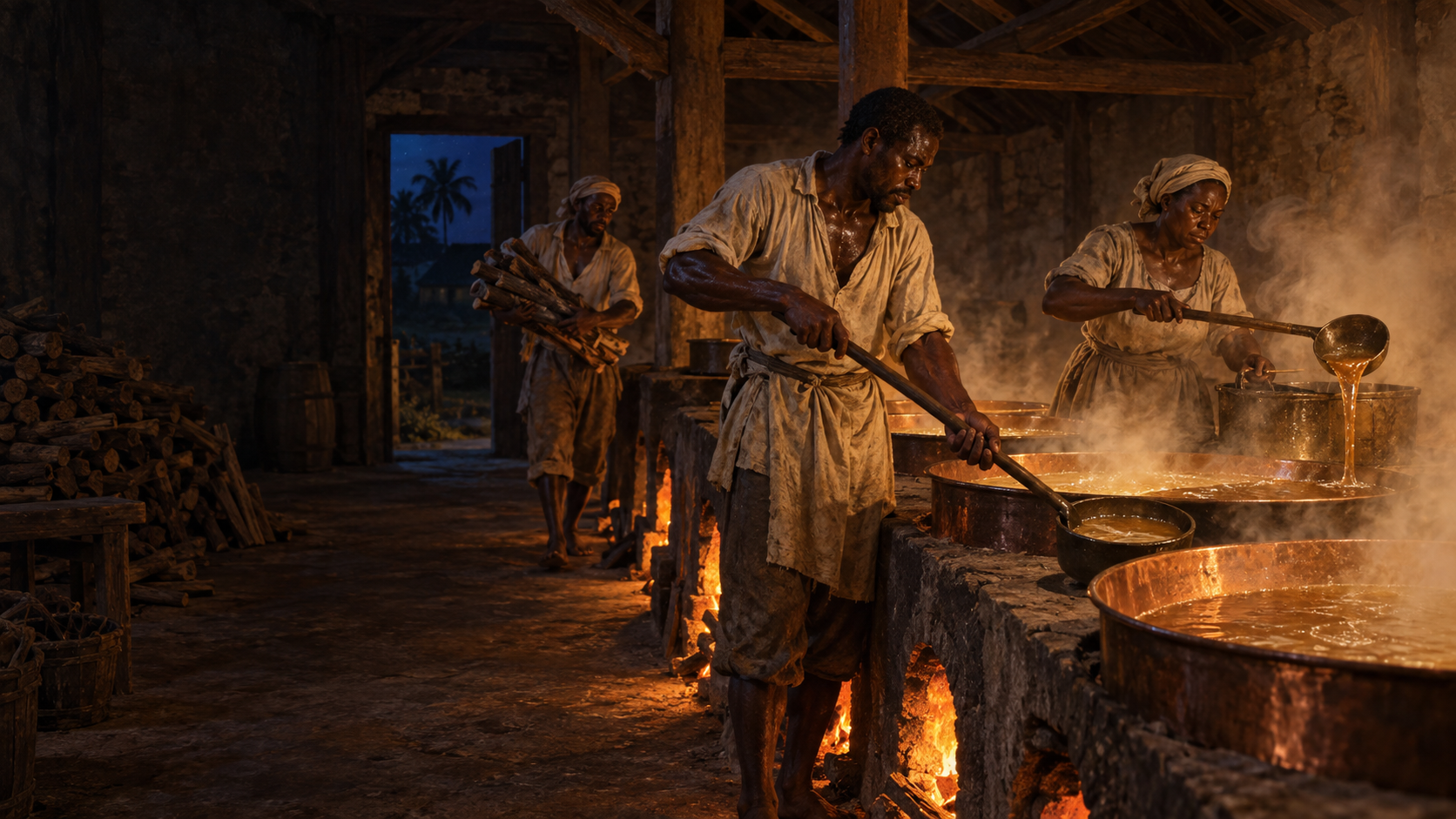
Original illustration generated for this lecture with the built-in image-generation tool. Exact prompt: image-prompts.json. The scene is illustrative, not documentary evidence.
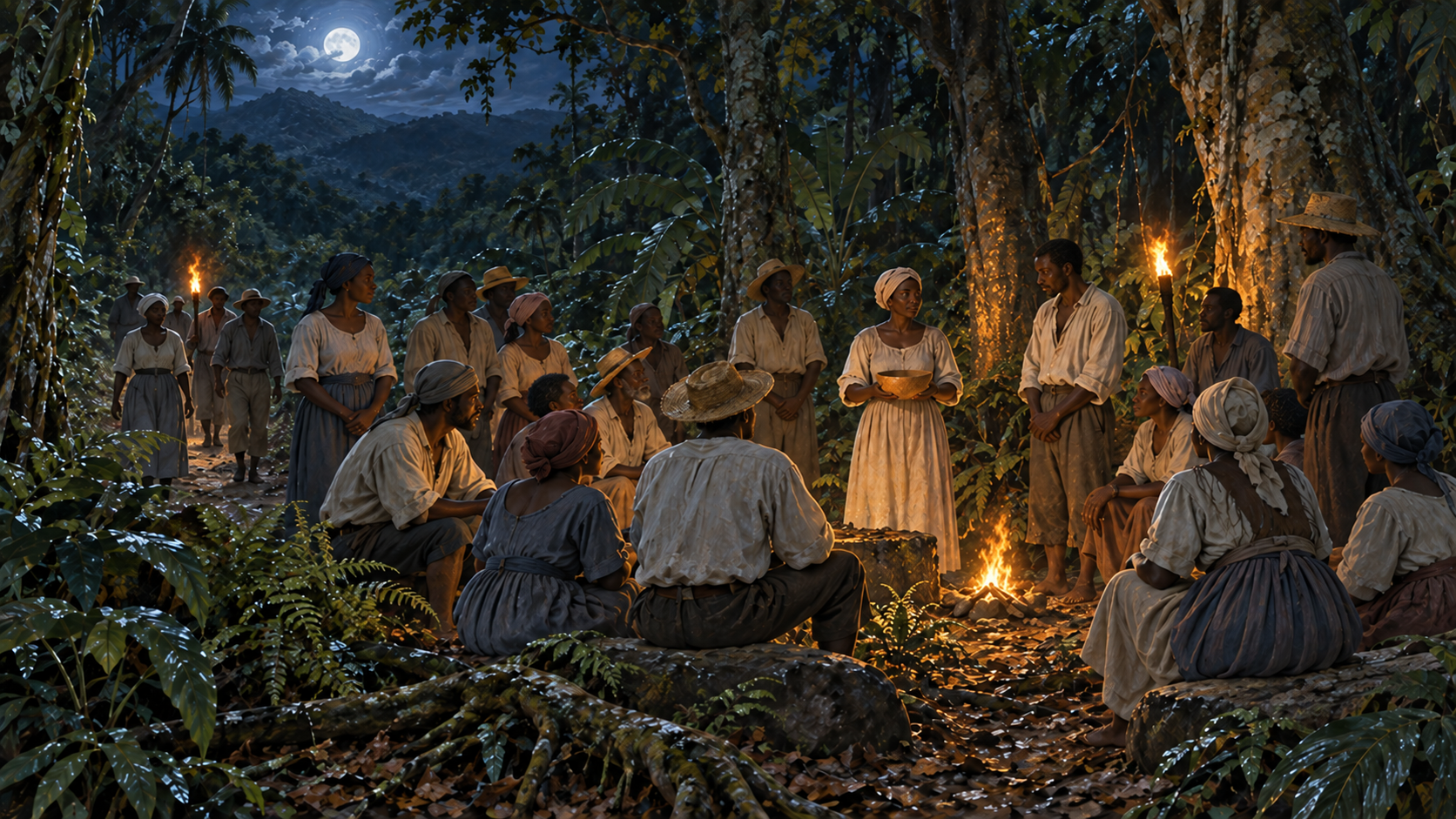
Original generated illustration, 03-gathering.png, from the Bois Caïman opening film. Illustrative staging of a remembered scene.
Source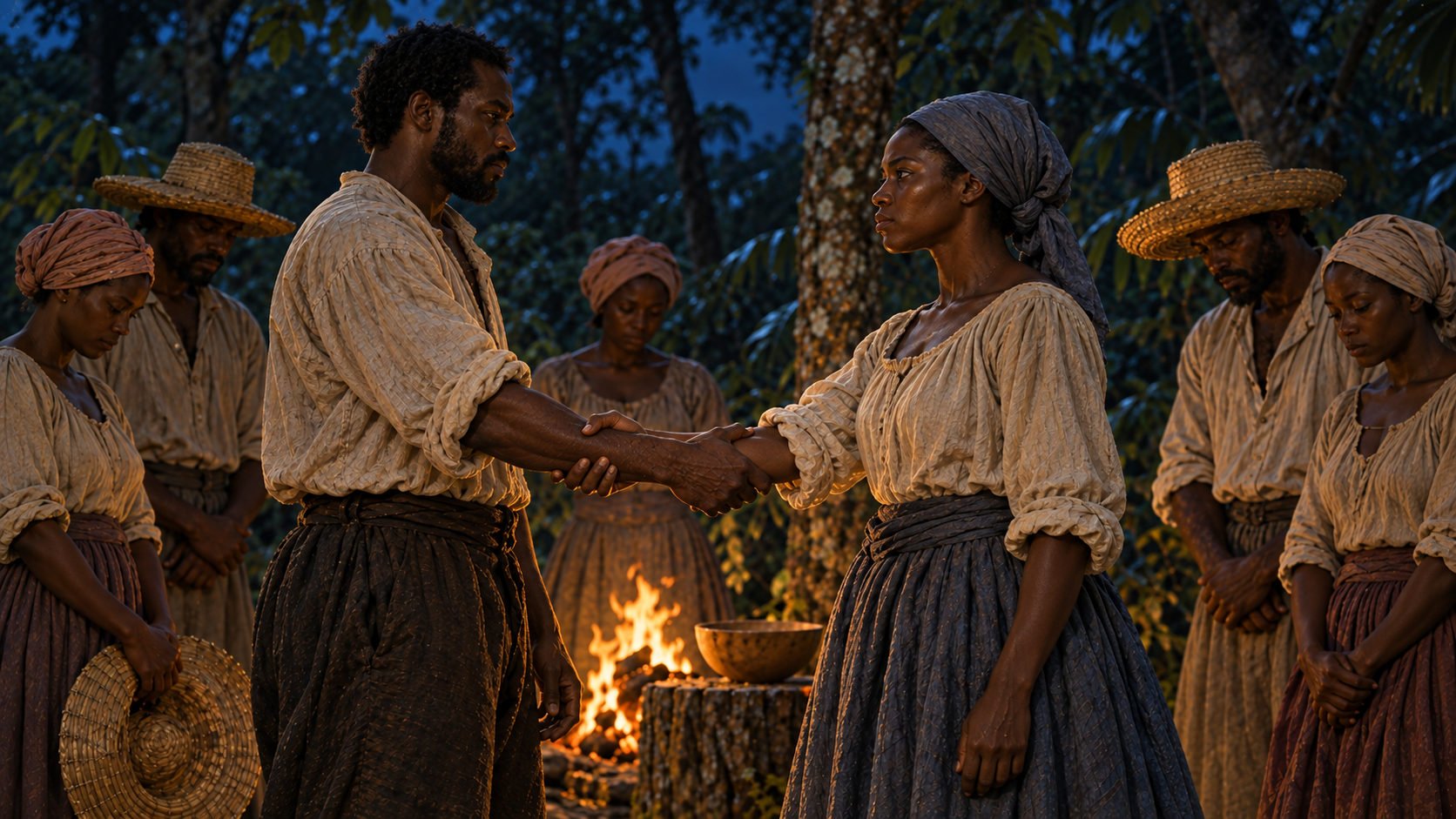
Original generated illustration, 06-promise-v2.png, from the opening film, revision 2. The gesture is illustrative, not documentary evidence.
Source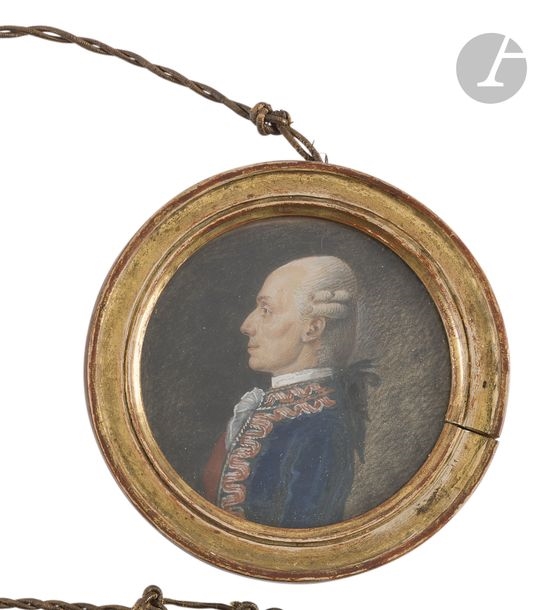
Jean-François Guillet dit Vallière, 1787. Ader sale, 13 June 2025, lot 38; digital reproduction via MutualArt.
The eighteenth-century artwork is in the public domain by age. No open license for this specific digital reproduction was verified. Preserve the auction watermark; do not label the image CC0 or CC BY.
Source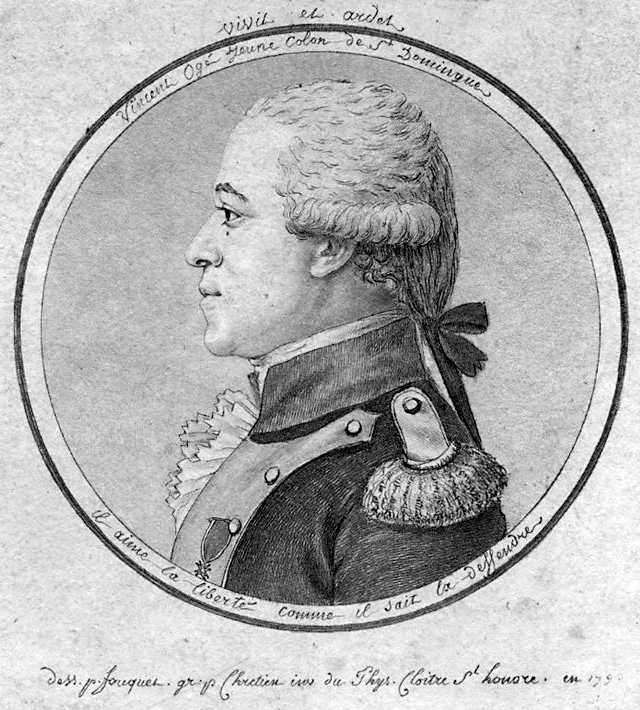
Gilles-Louis Chrétien, after Fouquet, 1790. New York Public Library; via Wikimedia Commons. Public domain.
Wikimedia Commons marks the reproduction public domain (Public Domain Mark 1.0 / PD-Art).
Source
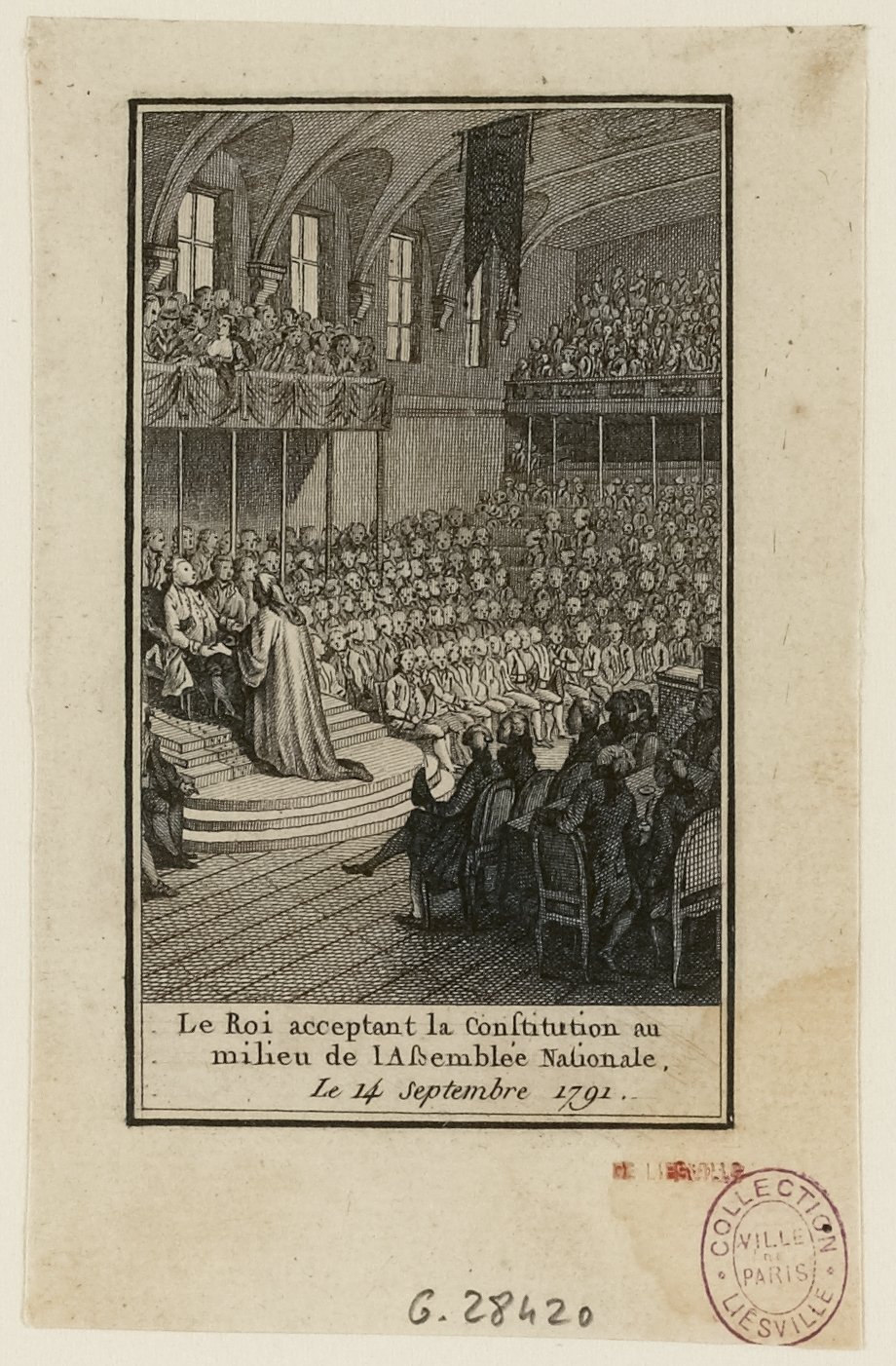
Jean-Baptiste-Michel Dupréel, after Jean-Michel Moreau le Jeune. CC0 Paris Musées / Musée Carnavalet – Histoire de Paris, G.28420.
Museum record and IIIF manifest explicitly identify the supplied reproduction as CC0.
SourceComplete lecture image credits · Illustration provenance
Historical and philosophical sources
- C. L. R. James, The Black Jacobins, preface to the first edition (1938), paragraph 5 and following in the linked transcription. Assigned September 25. The transcription supplies no reliable printed page locator.
- C. L. R. James, The Black Jacobins, chapter IV, “The San Domingo Masses Begin,” pp. 79–80. Working and living in large groups; travel for worship and news; parish representatives arranging the uprising. Brief instructor preview; assigned September 30.
- Michel-Rolph Trouillot, Silencing the Past (1995), chapter 3, “An Unthinkable History,” pp. 70–107. Instructor background; not assigned.
- Code Noir (1685), articles II–III, XII–XIII, XVI–XVII, XLIV and XLVII. French text in the 1744 printed collection. The displayed English excerpts are translations prepared for this lecture; ellipses mark omissions.
- Code Noir, English transcription, National Park Service, citing the George Mason University collection. Compare article XLIV against the French meubles; the English page renders it misleadingly as “charges.”
- Declaration of the Rights of Man and of the Citizen (1789), articles 1, 2 and 17. English text, Élysée.
- Diderot and collaborators, Encyclopédie, “Œconomie rustique, Sucrerie,” plates I, II and IV (1762), Newberry Library. See Sarah Peters Kernan’s contextual essay, “Sugar and Power in the Early Modern World.”
- Jacques François Des Longchamps, Carte d l’île de Saint Domingue (1780), Library of Congress, G4930 1780 .L6. Public-domain map, digital copy via Wikimedia Commons.
- Jeremy D. Popkin, “The Haitian Revolution (1791–1804): A Different Route to Emancipation,” University of Kentucky.
- French National Convention, decree of 4 February 1794 (16 pluviôse an II), Légifrance.
- Antoine Dalmas (written 1793–94, published 1814) and Céligny Ardouin (written 1841, published 1865), in John-Charles Duffy, Early accounts of the Bois Caïman ceremony.
- Fondation Aquin Solidarité, Boukman Eksperyans artist profile: the band’s name, rasin music, and the political reception of “Kè M Pa Sote” in 1990.
- Yaa Gyasi, Homegoing (2016), “Effia” and “Esi.” Course readings for September 21 and 23; supplied FB2 and project research notebook. The novel is not testimony about Saint-Domingue.
- Kenneth Pomeranz, The Great Divergence, introduction, pp. 3–27. Course reading for September 14 and project research notebook.
- Stuart Hall, “The West and the Rest”; Edward Said, “The Clash of Ignorance.” Earlier course readings and project research notebook.
- Corrected DWC 201 fall 2026 schedule: September 28, 1801 Constitution and Louverture’s letters; September 30, James chapter IV, Buck-Morss, and Dubois/Garrigus selections.
- University of Glasgow, The Saint Lauretia Project, “Enslaved People’s work on sugar plantations.” Comparative Caribbean background on rapid processing and crop-season night work; its particular calendar and gang schedule are not asserted for every Saint-Domingue estate.
- Trouillot, Silencing the Past, pp. 103–104. His account of early negotiating demands by rebellion leaders, used to discuss internally generated purposes. These are mediated negotiating demands, not a verbatim collective manifesto or a statement made at Bois Caïman.
- Trouillot, “An Unthinkable History,” pp. 72–74 and 82–89: political authorship and the limits of contemporary interpretive categories.
- José Martí, “Our América” (1891), translated by Esther Allen. The graft-and-trunk sentence is quoted from this translation. Assigned October 14.
- DWC 201 course plans: Azuela and the Mexican Revolution, October 26; Vasconcelos and Paz, October 28; muralism and indigenismo, October 30. A forward comparison, not a claim of direct influence from Haiti.
- P. J. Laborie, The Coffee Planter of Saint Domingo (1798), pp. 178–179. Regulated weekend dances, exclusion of outsiders, and passes to markets. Published after the 1791 uprising.
- Laborie, The Coffee Planter of Saint Domingo (1798), chapter IV, pp. 157–170, excerpt in Liberty, Equality, Fraternity. Rest, recreation, and the preservation of enslaved labor.
- Michel-Rolph Trouillot, Silencing the Past (1995), “An Unthinkable History,” pp. 83–84. Repression of resistance and its depoliticization in colonial explanations.
- Nick Nesbitt, Universal Emancipation The Haitian Revolution and the Radical Enlightenment (2008), introduction, pp. 1–3. Haiti participates in and transforms a transnational Radical Enlightenment. Instructor background.
- Adom Getachew, “Universalism After the Post-colonial Turn Interpreting the Haitian Revolution,” Political Theory 44.6 (2016), pp. 821–845. Inclusion and realization, pp. 822–827; domination and autonomy, pp. 828–834; tensions between sovereignty and personal freedom, pp. 837–838. Instructor background.
- Michael E. Bratman, Shared Agency A Planning Theory of Acting Together (2014), chapter 2, pp. 40–59. A brief analytical comparison concerning shared intention and coordinating plans; not a claimed influence on Haitian actors.
- Vincent Ogé, “Motion Made by Vincent Ogé the Younger” (1789), translated in Lynn Hunt, The French Revolution and Human Rights (1996), pp. 103–104. Liberty Equality Fraternity document collection.
- French National Assembly, decrees of 13 and 15 May 1791, in Lynn Hunt, The French Revolution and Human Rights (1996), pp. 106–107; excerpt PDF p. 1. Restrictions on political rights and on changing enslaved status.
- Nikole Hannah-Jones, opening essay for The 1619 Project, The New York Times Magazine, 18 August 2019, printed p. 16 (PDF p. 3). Black Americans as agents in making the stated principles of American democracy effective.
- Gordon S. Wood, interview with Tom Mackaman, 28 November 2019. Wood’s own responses on the Declaration’s challenge to inherited hierarchy. The brief lecture comparison does not endorse all historical claims in the interview.
- Frédéric Régent, “Préjugé de couleur, esclavage et citoyennetés dans les colonies françaises (1789–1848),” Comité Carnot, 13 May 2021. Saint-Marc and Peynier, Ogé’s rising, and resistance to the May decrees.
- Jean-François Guillet dit Vallière, portrait of Antoine de Thomassin, comte de Peynier, 1787. Ader sale, 13 June 2025, lot 38; identification by Lemoine-Bouchard.
- Gilles-Louis Chrétien after Fouquet, portrait of Vincent Ogé, 1790. New York Public Library, digital ID 1248954; reproduction via Wikimedia Commons.
- Jean-Baptiste-Michel Dupréel after Jean-Michel Moreau le Jeune, Le Roi acceptant la Constitution au milieu de l’Assemblée nationale, le 14 septembre 1791. Period print, Musée Carnavalet, G.28420. The depicted event follows the August uprising; the image illustrates the institution, not the May decrees.
